
Orwell said, “Who controls the past controls the future. Who controls the present controls the past.” Much is at stake in who tells America’s story on the 250th anniversary of the nation’s birth. The question is who gets to decide what this country remembers and who decides what we forget. It is ominous that this person may be Donald Trump and the MAGA movement.
American Community Media held a discussion about these dangers and the appropriation and falsification of history with Margaret Huang, senior fellow at the Leadership Conference on Civil and Human Rights and former president and CEO of the Southern Poverty Law Center, Ann Burroughs, president and CEO of the Japanese American National Museum and chair of the International Council of Amnesty International, Ray Suarez, journalist and author of We Are Home: Becoming American in the 21st Century, and Anneshia Hardy, executive director of Alabama Values.
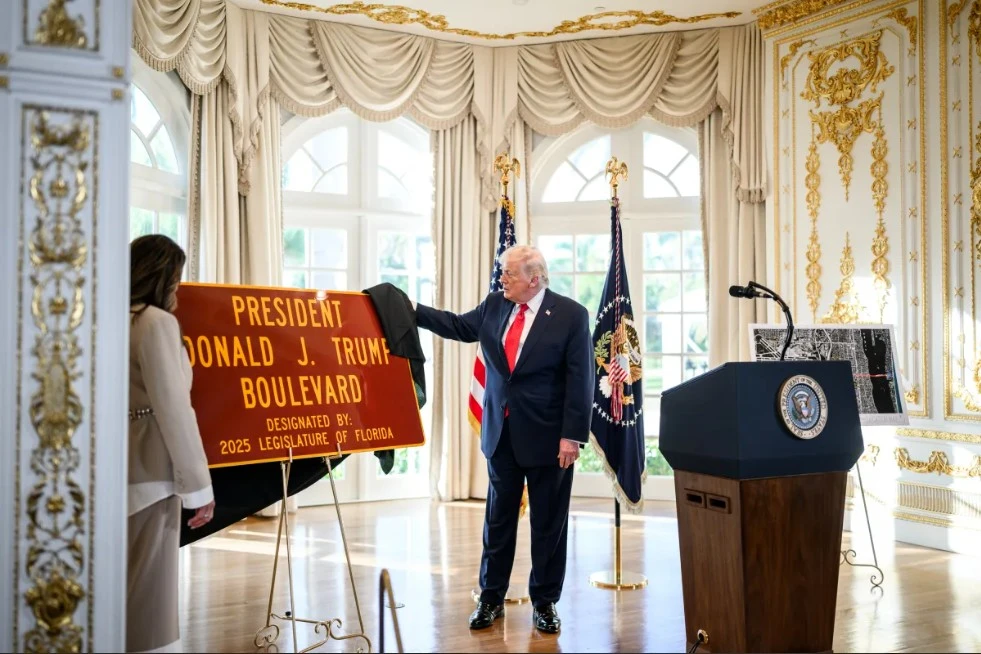
Special attention was given to the fact that the celebratory period of the 250th anniversary of the United States coincides with Donald Trump’s birthday, which falls on June 14, the same day as the official anniversary of the founding of the U.S. Army. The Trump administration and the media ecosystem aligned with it regularly emphasize this date coincidence and assign symbolic significance to it. Critics say Trump consciously builds on a narrative in which his person and America’s national destiny are intertwined.
Within the framework of the 250th anniversary celebration, he seeks to present his own political role as historical in scale. Large-scale, military-style parades and spectacular national events have already been organized, raising the question of whether the celebrations are for the United States, for the American military, or rather for Trump’s personal cult. According to some analysts, the symbolic merging of the dates reinforces the political message that portrays Trump not simply as a leader but as the embodiment of the nation, while his supporters use religious language to describe his role.
The danger of the 250th anniversary goes beyond the rhetorical fusion of a state jubilee with the personal celebration of the incumbent president, which could set a dangerous precedent by tying national identity to a specific political figure. What is at stake is what the national memory preserves, what values it attributes to America, who it considers American, and what history it presents to posterity. In this, a clear effort can be recognized to subordinate reality to an ideology.
According to Ann Burroughs, Trump paints a very narrowed picture of American history. He homogenizes a culture that completely avoids accountability and frames the past through a single ideological lens. We know that this is not American history. True American history is characterized by extraordinary diversity, a multitude of opinions, geography, history, and a memory worth celebrating, good ideas, constitutional struggle, confrontation with ourselves and self-reflection.
As she said, “We know that authoritarian regimes consistently attack culture and history first. They besiege memory. Museums have had to try to resist, to keep their doors open, to preserve the facts, to remain faithful not only to the truth but to our communities in a very intentional destabilizing environment. Incredible pressure has been placed on us, unbearable pressure to conform to political expectations and to change history. We were threatened with the withdrawal of our funding.”
Margaret Huang followed Confederate monuments across the country for years: “Almost every state in the country has Confederate monuments. None of the monuments were erected immediately after the war but 60 to 80 years later, when the narrative of white supremacy stood at the forefront in the fight against the civil rights movement. The spread of Confederate monuments began, honoring those who were never heroes in this country. More than 2,000 monuments praise and elevate those who were traitors to this country.”
Ray Suarez spoke about changes to elementary school curricula: “A school leader was removed because Trump believes too much of the telling of our history includes the idea that slavery was wrong, well, yes, slavery was wrong. The idea that white people feel bad about it is a lie. This is all a power play to reassert white supremacy so that the country belongs to only one kind of person. Chanting in Charlottesville that ‘you will not replace us’ is at the center of this ideology. We are being very consciously asked to celebrate a history that is increasingly narrower and incomplete. We are being asked to stand up for an ideology that demands the erasure of truth.”
A coordinated effort is underway to control history. We see national museums being pressured to sanitize their exhibitions, school curricula being altered in the name of unity. This is narrative governance that reinforces a white-centered and exclusionary version of America. History is being used as a tool of power. The erasure of narrative becomes structural when parts of the population are pushed out of the nation and out of the nation’s memory. It then becomes easier to remove them from the nation itself.
The whitewashing of history is not a passive act but a political act that restructures white supremacy. Authoritarian and fascist movements thrive in such narratives and terrain. The question is not whether America will tell a story about itself, but whether it will be truthful enough or retreat into mythmaking. One of the greatest tools of authoritarian regimes is to intimidate people so thoroughly that they no longer defend themselves.
Over the past year and a half, the American press has increasingly focused on how the Trump administration and the MAGA movement are attempting to reinterpret American national identity ahead of the upcoming 250th anniversary of the United States in 2026. This is not only about festive preparations but about a comprehensive cultural and political project aimed at reinterpreting American history and national symbols in a way that better fits Trump’s political narrative and the MAGA ideology.
At the center of the debate is what emphasis the White House intends to give to the official program of the 250th anniversary. Trump has previously announced that he intends to counter what he and his allies call “left-wing historical falsification” with “patriotic education” initiatives. According to the press, one element of the new concept is the silencing of the more conflict-ridden chapters of American history, especially the legacy of slavery and racial segregation, while placing emphasis on national greatness, military strength, and the heroic portrayal of the Founding Fathers, even distorting their content.
One battlefield of the cultural struggle has become the world of museums. Conservative politicians and groups allied with Trump are exerting pressure on certain institutions to modify the narrative of their exhibitions, particularly regarding sections dealing with slavery, the Civil War, or the civil rights movement. The controversies surrounding the Smithsonian institution system indicate that the question of historical memory is not merely an academic issue but a direct political battleground.
The appropriation of national symbols is a central element of the MAGA movement’s identity politics. The flag, Independence Day, respect for veterans, or the rhetoric of border protection are all motifs that use the traditional language of American patriotism, yet critics say they are interpreted in an exclusive and exclusionary way. Within this framework, the concept of “real America” often intertwines with white, Christian, conservative identity, while immigrants, racial minorities, and liberal urban communities are implicitly placed outside the nation.
Christian nationalism is also a prominent element of this discourse. Several media outlets have pointed out that the Trump campaign and affiliated organizations regularly refer to the United States as a “Christian nation” and imbue founding documents with a sense of religious mission. Historians say this interpretation ignores the secular character of the Constitution and the principle of the separation of church and state, which the Founding Fathers consciously established.
According to analyses published in the American press, preparations for the 250th anniversary are thus not merely about celebration but about a competition of narratives. On one side is the effort to present the United States as a unified, heroic, and conflict-free story whose development is linear and glorious. On the other side are historians and civil organizations who argue that the national self-image can only be credible if the darker chapters of the past remain part of the collective memory.
Trump has repeatedly indicated that for the anniversary he intends to organize large-scale events, military parades, and to create new monuments. These events serve not only a celebratory function but also carry a political message that links national unity to the current leadership. Critics fear that the official celebratory program will serve to reinforce the government’s political priorities while pushing issues of social division into the background.
One sensitive point of the debate is how the history of slavery and racial inequality appears in official state communication. Several journalists have pointed out that certain conservative politicians use relativizing language when describing slavery as an “economic system” or a “historical institution” without emphasizing its inhuman and violent nature. Although there is no official denial, the shift in emphasis alone provokes controversy.
The 250th anniversary thus appears not only as a historical milestone but also as a political test. The question is what image the United States presents to the world and to its own citizens. The dilemmas raised in the American press suggest that shaping national memory will remain one of the central arenas of cultural and political struggle in the coming years.
The stakes of the debate are nothing less than whether the country can simultaneously acknowledge its historical achievements and confront the contradictions of its past. Supporters of the celebratory concept outlined by the Trump administration argue that strengthening patriotism is necessary for national cohesion. Critics fear that under the slogan of unity, a narrower, ideologically defined image of America will come to the forefront, one that does not reflect the diversity of society.
In American public life, the 250th anniversary is therefore not merely a celebration but a debate about who gets to define what America means and what story the country tells about itself.
Hozzászólások
A hozzászólásokat a Disqus szolgáltatja.